

Clean toys feel better! Save $84


Silicone vs. Stainless Steel vs. Glass: Which Butt Plug Material Suits You

At a Glance
- Three butt plug materials are worth your money: medical-grade silicone, stainless steel, and glass. Everything else is a compromise.
- Non-porous is the whole safety question: porous materials trap bacteria in pits that cleaning can't reach.
- Silicone flexes, but steel and glass don't. That single difference changes how each one feels going in.
- Weight is a feature, not a side effect: a steel plug delivers a constant downward pull that silicone can't reproduce.
- Glass and steel hold temperature. Warm or chill them and you've got a different toy for free.
Material gets treated as an afterthought behind size and shape, which is backwards. Material determines whether a toy is safe to put in your body at all, and after that it determines most of what the toy feels like.
Three butt plug materials clear the bar. Here's how each one differs and how to pick.
What "Body Safe" Actually Means
A body-safe butt plug is non-porous. That's the definition, and it's more specific than the marketing suggests.
Porous materials have microscopic pits across their surface. Bacteria settle into those pits and stay there through soap, water, and everything else you can reasonably do at home. Over weeks, the toy accumulates a bacterial load you can't see and can't remove, which is where irritation and infection come from.
Non-porous surfaces have nowhere for that to happen. You wash them, and they're genuinely clean. That's it. That's the difference, and it's why the three materials below are the only ones worth considering for something going inside you.
The materials to avoid: jelly, TPE, TPR, soft PVC, rubber, and anything sold with no stated material at all. Cheap plastics can also carry phthalates, plasticisers that have no business in intimate contact.
Silicone
A silicone butt plug is the default recommendation, and deservedly so.
Medical-grade silicone is non-porous, phthalate-free, hypoallergenic, and slightly flexible. That flex is the important bit. It forgives an imperfect angle, gives a little as you insert, and warms to body temperature within a minute or two of going in. For anyone still learning what their body wants, it's the most cooperative material there is.
The trade-offs are real but minor. Silicone has drag, so it needs more lube than glass or steel. It attracts lint in a drawer. And it can be degraded by silicone-based lube over time, so pair it with a water-based formula.
Best for: a first plug, longer wear, anyone who wants forgiveness over intensity.

Stainless Steel
Is stainless steel body safe? Yes, provided it's surgical grade, typically 304 or 316L. Both are non-porous, non-reactive, and used in actual surgical instruments, which is about as strong a safety record as a material can have.
Are metal butt plugs safe in practice? They are, with one caveat that has nothing to do with the metal: a stainless steel butt plug is unforgiving. It doesn't flex, so it won't accommodate a bad angle, and you have to let the toy do the work rather than push.
What you get in exchange is weight. A stainless steel butt plug produces a constant, gentle downward sensation that silicone can't imitate at any price, and for a lot of people that pull is the entire appeal. A steel plug also stays slick with far less lube, and it holds temperature beautifully. Run it under warm water for a minute before use, and it arrives at body temperature already.
Best for: people who know their size, want weight and pressure, and like temperature play.

Glass
Are glass butt plugs safe? Yes, when they're borosilicate, the same tempered glass used for laboratory equipment and cookware. It's engineered to survive thermal shock and impact, and it doesn't shatter in ordinary use.
Ordinary soda-lime glass is a different matter, which is why the material name on the listing matters more than the price. If a seller won't say "borosilicate," walk away.
A glass butt plug is the slickest of the three. It needs the least lube, it's completely rigid, and it's the easiest to clean because you can see when it's clean. Glass takes temperature even more dramatically than steel: a few minutes in cool water gives you a sensation nothing else in your drawer can deliver.
Inspect it before each use! A chip or crack means it's finished, no matter how small.
Best for: temperature play, easy cleaning, people who like rigidity without steel's weight.

Side by Side
|
Material |
Feel |
Weight |
Temperature play |
Lube needed |
|---|---|---|---|---|
|
Medical-grade silicone |
Slight give, warms fast |
Light |
No |
Most |
|
Stainless steel |
Rigid, very smooth |
Heavy |
Yes |
Little |
|
Borosilicate glass |
Rigid, slickest |
Medium |
Yes, strongest |
Least |
So What's the Best Butt Plug Material?
For a first purchase, silicone. It's the most forgiving material while you're working out what you like, and its flexibility covers for technique you haven't developed yet. Nobody regrets starting there.
For a second, steel or glass, chosen for what silicone didn't give you. If you wanted more presence and more pressure, steel. If you wanted temperature and slickness, glass.
If you're still at the first-purchase stage, size matters more than any of this, and our guide to choosing a beginner anal plug covers the dimensions to look for alongside the material.
Cleaning, by Material
All three clean with warm water and mild unscented soap, or a purpose-made cleaner. Beyond that, they differ:
- Silicone with no electronics: boil for three to five minutes, or run it through the top rack of a dishwasher with no detergent.
- Stainless steel: boiling is fine, and so is a 10 percent bleach solution followed by a thorough rinse.
- Borosilicate glass: boiling is fine. Let it cool in the water rather than shocking it under a cold tap.
- Anything with a motor: wipe down only. Never submerge.
Our toy cleaning products handle all three without the guesswork. The full routine, including the seam at the base where residue hides, is in our guide on how to use a butt plug.
Material and Sizing Up
Worth knowing before you buy your second plug: a steel plug at 1.25 inches feels considerably larger than a silicone plug at the same measurement, because there's no give at all. People who size up and switch material in the same purchase often conclude they've regressed.
Change one variable at a time. If you're working through sizes deliberately, our guide to anal training covers how to pace that without losing ground.
Materials We Build On
Every GIDDI toy uses lab-tested medical-grade silicone: non-porous, phthalate-free, hypoallergenic, and fully waterproof. The same standard applies across the range, whether you're looking at an entry-level massager or the top of the line.
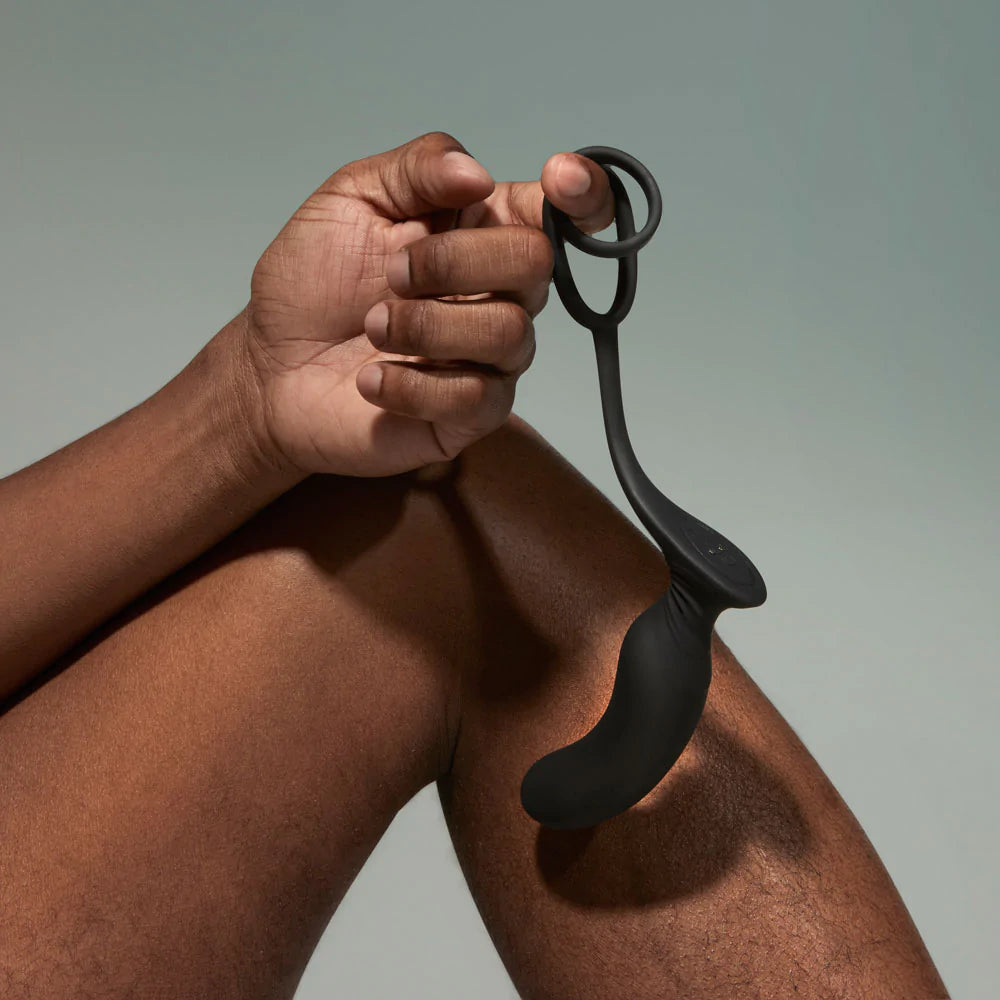
If you want that material standard in a plug specifically, GIDDI's butt plugs are the place to start. The Vulcan vibrating prostate plug pairs it with built-in cock and scrotum rings and a wireless remote, at 1.25 inches thick. Silicone rather than steel or glass, so you get the flex and the body-temperature warmth described above.
If the prostate is what you're actually after rather than fullness, GIDDI's prostate massagers are shaped for it, and a butt plug vs prostate massager comparison will tell you which one belongs in your drawer. Give Your Prostate Wings.
Related Reading
- How to Use a Butt Plug: A No-Nonsense Guide for Men
- Beginner Anal Plugs: How to Pick One You'll Actually Use
- Anal Training: How to Size Up Without Wrecking Your Progress
- Butt Plug vs. Prostate Massager: Which One Do You Actually Want?