

No code needed


4 Ways a Prostate Massage Benefits Your Health

At a Glance
- Why the prostate needs regular attention: Modern sedentary lifestyles compress blood flow and nerves in the pelvic area, causing fluid buildup that can lead to pain, inflammation, and erectile issues over time.
- Pleasure benefits: Prostate orgasms involve up to 12 muscle contractions versus 4-8 from penile stimulation alone. Regular massage also contributes to stronger, longer-lasting erections.
- Health benefits: Research links prostate massage to reduced erectile dysfunction symptoms, better urinary flow, relief from prostatitis, and fewer cases of painful ejaculation.
- How to start: Fingers or a purpose-built prostate massager will do the job. Lube is non-negotiable either way.
- Important caveat: Prostate massage is not recommended during active bacterial prostatitis infections. Check with a urologist if you have ongoing symptoms.
Your prostate is easy to ignore until it becomes a problem. About 80% of men will experience a prostate issue at some point, and most won't think about it until symptoms show up.
That's backwards. The prostate responds well to regular attention, both in terms of health and pleasure. Prostate massage is one of the simplest things you can add to your wellness routine, and the benefits go well beyond the obvious.
Here's what it does, why it matters, and how to do it right.
What Is the Prostate?
Located just below the bladder, the prostate is a walnut-sized gland in the reproductive system of people assigned male at birth. Its biological job is producing prostatic fluid, AKA the liquid that carries semen out of the body during ejaculation.
Its other job is pleasure. The prostate is surrounded by thousands of nerve endings, making it the most sensitive pleasure spot in the male body. It swells when aroused, which is why direct or indirect pressure on it during sex or masturbation can produce orgasms that are significantly more intense than penile stimulation alone.

Related: What Is the P-Spot? A Complete Guide to the Male G-Spot
Why the Prostate Needs Regular Attention
Most people don't think about their prostate until something goes wrong. But the prostate is affected by daily habits, particularly how much you sit.
Modern sedentary lifestyles compress the nerves and blood vessels in the pelvic area. When the prostate is consistently compressed and underused, fluid can build up inside it. Over time, that stagnant fluid causes pressure, inflammation, and swelling, which feeds into erectile dysfunction, urinary issues, and chronic pelvic pain.
Prostate massage works against this. It releases built-up fluid, restores blood flow, and reduces the compression that leads to those problems. Think of it as maintenance for a gland that gets ignored far too often.
What Is a Prostate Massage?
A prostate massage is stimulation of the prostate using fingers or a sex toy. It can be done solo or with a partner, for pleasure, for health, or both.
If you've never explored prostate play before, regular massage is a useful place to start. It gives you a chance to learn what feels good at your own pace, with no performance expectations.
How to Massage Your Prostate
There are two main approaches. Both work well; what you choose depends on preference and where you are in your exploration.
Use Your Fingers
Start with clean, trimmed hands and plenty of lube applied to both your finger and the anus. Begin by massaging the external muscles around the anal area until you feel relaxed. Rushing this part makes everything harder.
Once you're ready, insert one or two fingers slowly and point them toward your belly button. You're looking for a soft, rounded bulge that feels distinct from the surrounding tissue. That's the prostate.
From there, experiment with motion:
- Circular
- Back-and-forth
- A come-hither curl toward the belly button (the most effective for most people)
- Direct tapping or pressing
A sensation that feels like needing to pee usually means you're in exactly the right spot. Keep going until you feel satisfied, or until you orgasm.
Use a Toy
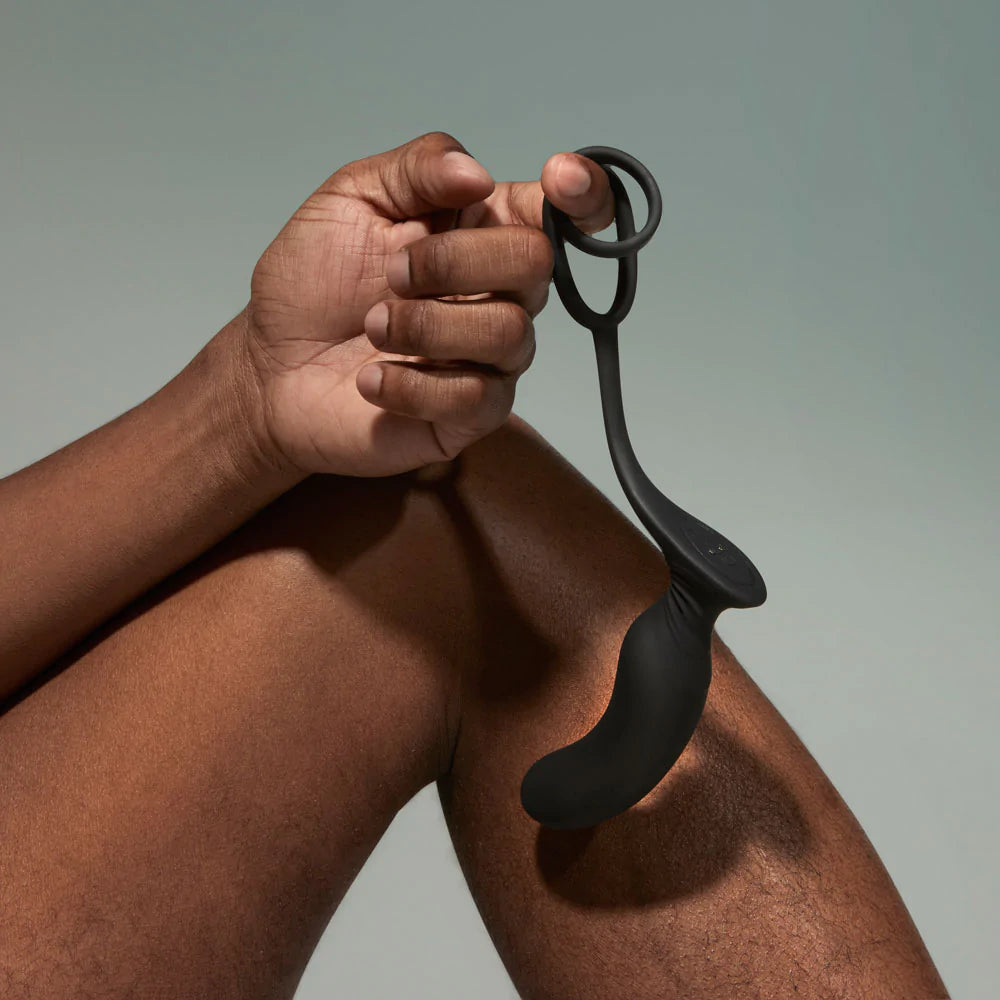
If you've tried fingers and want more, a dedicated prostate massager takes things further. These are shaped specifically to reach and hold position against the prostate, which frees up your hands and applies consistent pressure that fingers can't maintain.
Tomo II replicates the come-hither motion mechanically, with wireless remote control for hands-free use. Thor has a rotating head with powerful vibration for a different kind of sensation. Both work solo or with a partner.

To insert a prostate massager, relax the sphincter first, apply plenty of lube to the toy and the anus, and glide it in slowly with deep, measured breaths. Don't force it. Angle the head slightly downward as you go. When the tip makes contact with the prostate, you'll feel a distinct pleasurable pressure that tells you you're in the right place.
Not sure which toy fits your needs? Take the GIDDI Quiz. It takes five minutes and matches you to the right massager.
The Benefits of Prostate Massage
More Intense Orgasms
Penile orgasms typically produce four to eight pelvic muscle contractions. Prostate orgasms produce up to 12. That difference in physical response means longer, more full-body orgasms felt from head to toe rather than concentrated in one place.
Many men report dramatically increased ejaculation intensity alongside prostate stimulation. Since massagers like the Tomo are fully hands-free, those benefits are available solo or with a partner, without needing to coordinate multiple things at once.
Related: What Does a Prostate Orgasm Feel Like?
Stronger, Longer-Lasting Erections
Prostate massage increases blood circulation in the pelvic area. Better circulation means harder, thicker erections over time. For men who notice their erections have softened or become less reliable, adding regular prostate massage to their routine is worth trying before assuming it's an irreversible change.
Reduced Erectile Dysfunction
Erectile dysfunction affects a significant portion of men at some point, and the causes are often circulatory or related to prostatic fluid buildup. Research shows that men who received prostate massage three to four times per week saw measurable reductions in ED symptoms.
It's not a guaranteed fix, and the research base is still growing. But for a low-risk, no-downside intervention, the evidence is promising.
Better Urinary Flow
The prostate wraps around the urethra, the tube that drains the bladder. When the prostate swells, it squeezes the urethra, causing weak, slow, or interrupted urine streams. Regular massage keeps the prostate from swelling and helps maintain healthy urinary flow.
This becomes increasingly relevant with age, as prostate enlargement is common. Staying proactive is easier than managing symptoms after they develop.
Relief From Prostatitis
Prostatitis is inflammation of the prostate. Symptoms include pelvic pain, body aches, fever, and urinary problems. Chronic cases can significantly affect quality of life.
For non-bacterial prostatitis, a massage can help by releasing the fluid buildup driving the inflammation and reducing pressure in the pelvic floor. It won't treat bacterial infections (antibiotics are needed for those), but as a complement to medical care for chronic non-bacterial cases, it's a well-established approach.
Less Painful Ejaculation
Pain during or after ejaculation (clinically called dysorgasmia or orgasmalgia) is more common than most people realize. It can be caused by cysts, surgery, medications, or blockages in the reproductive tract.
Prostate massage helps clear those blockages by releasing built-up prostatic fluid. For men whose painful ejaculation is linked to blockages or pelvic tension rather than a structural cause, regular massage often reduces symptoms considerably.
The Bottom Line
There are few wellness practices that offer this range of benefits with this little downside. Prostate massage:
- Supports urinary health,
- Reduces ED risk,
- Eases prostatitis symptoms,
- Relieves painful ejaculation,
- Produces stronger orgasms.
- It doesn't have to be complicated. Start with fingers or a simple massager, use plenty of lube, and go slowly. If anything is painful, stop and reassess.
Related: How to Check for Prostate Cancer At Home
If you're experiencing ongoing prostate symptoms, get a prostate exam and talk to your urologist. Massage is a healthy addition to a prostate care routine, but it is not a substitute for medical evaluation.